
Leave Your Message





From Oil Chokepoints to Solar Strongholds: The New Energy Paradigm
The Strait of Hormuz, the narrow passage separating the Persian Gulf from the open ocean, has long been the world’s most critical energy chokepoint. With recent escalations in the region, the global energy market is once again holding its breath. Historically, such events have led to sharp spikes in oil and gas prices, reminding industrial consumers of the vulnerabilities inherent in fossil fuel dependency.
However, the current climate of uncertainty is having a paradoxical effect: it is accelerating the adoption of solar energy, not just as a sustainable alternative, but as a cornerstone of energy independence.

The Volatility Factor
When geopolitical tensions rise, oil futures become speculative. For commercial and industrial energy consumers, this unpredictability is a nightmare for budgeting. Solar energy offers a contrasting model. Once a photovoltaic (PV) system is installed, the cost of “fuel” (sunlight) is fixed at zero. In an environment where oil prices are susceptible to military conflict, the long-term power purchase agreements (PPAs) associated with solar farms offer a hedge against macroeconomic instability.
Supply Chain Realities
It would be remiss to ignore that the solar industry has its own supply chain complexities, often relying on materials sourced from specific global regions. However, the current crisis is acting as a catalyst for localization. Governments are now viewing domestic solar manufacturing not merely as an industrial policy, but as a matter of national security. We are seeing a surge in investment aimed at creating regional hubs for module assembly and battery storage to insulate nations from both fossil fuel price shocks and component shortages.
A Strategic Imperative
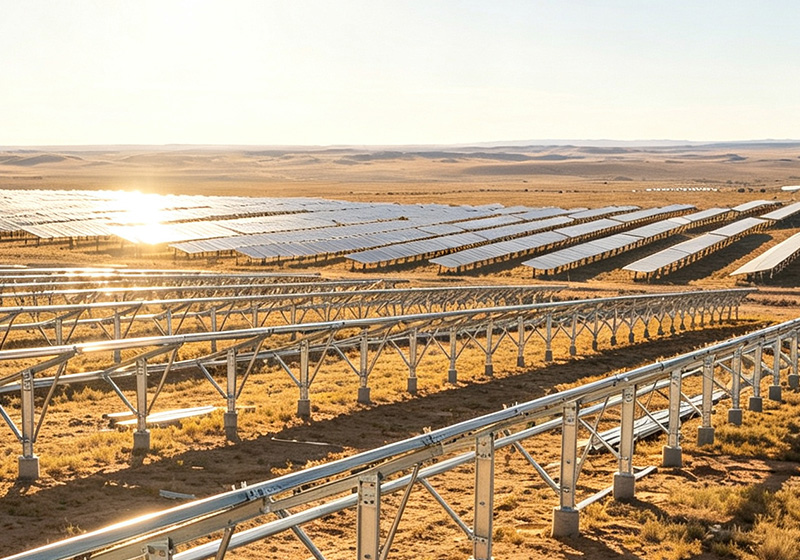
Perhaps the most significant shift is happening in the Middle East itself. Oil-exporting nations, acutely aware of the risks in the Strait, are pivoting heavily toward solar. By deploying massive utility-scale solar projects, these countries are adopting a strategy of “save the oil, sell the sun.” This allows them to free up petroleum for export—where it fetches a premium price—while using renewable energy to power their domestic grids and future-proof their economies.
Conclusion
While the immediate impact of the Strait of Hormuz situation is higher oil prices, the long-term consequence is a structural shift in how the world views energy. Solar is no longer a niche environmental choice; it is a strategic asset that provides price stability, supply chain resilience, and national security. As the world navigates these turbulent waters, the shift toward photovoltaics is not just inevitable—it is accelerating.