
Leave Your Message

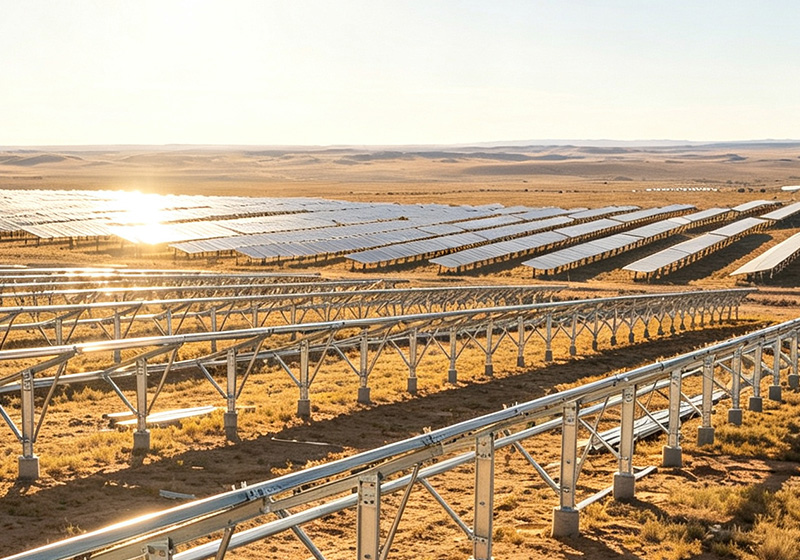





SolarPower Europe Publishes Guide for Agrivoltaics
SolarPower Europe has developed an agrisolar handbook with the farming industry to guide projects. It said the resource for farmers and solar developers is a “win-win-win” for agriculture, energy, and society.

The handbook lists benefits such as up to a 60% increase in crop yield, depending on crop type, season, regional climate, and PV setup. It also highlights soil temperature changes, with increases of up to 7 C during cold periods and decreases of up to 6 C during warm periods.
The handbook lists additional benefits, including up to an 80% increase in soil carbon storage for solar grazing projects, a 20% to 30% boost in water retention for interrow and elevated PV systems, and a 60% rise in pollinator presence, as observed in one project.
The handbook details the extra income agrisolar projects can offer farmers, primarily through land lease payments from solar developers, direct provision of agricultural infrastructure, or energy bill reductions.
It outlines various agrisolar ownership models, business structures, and revenue sources, as well as 10 agrisolar archetypes tailored to different types of farmland.
The archetypes include projects on arable and permanent crop land, permanent meadows, and covered areas, featuring elevated PV and interspace PV setups with or without livestock grazing. They also cover eco PV initiatives, PV within greenhouses, and installations on farm buildings.
For each archetype, the report presents the business case, agricultural and environmental impacts, and an example case study.
“To fully harness the potential of agrisolar, we must ensure farmers have the tools and incentives to participate,” said Seán Kelly, member of the European Parliament. “This includes simplifying grid connections, streamlining planning approvals, and putting payment schemes in place that encourage collaboration between agriculture and renewable energy. By providing clear pathways and support, we can help farmers embrace this opportunity and contribute to a more sustainable future.”
Part of the article excerpted from the network, infringement contact deleted.