
Leave Your Message







Central Europe's Solar Power Surge: A Model for Transitioning Economies
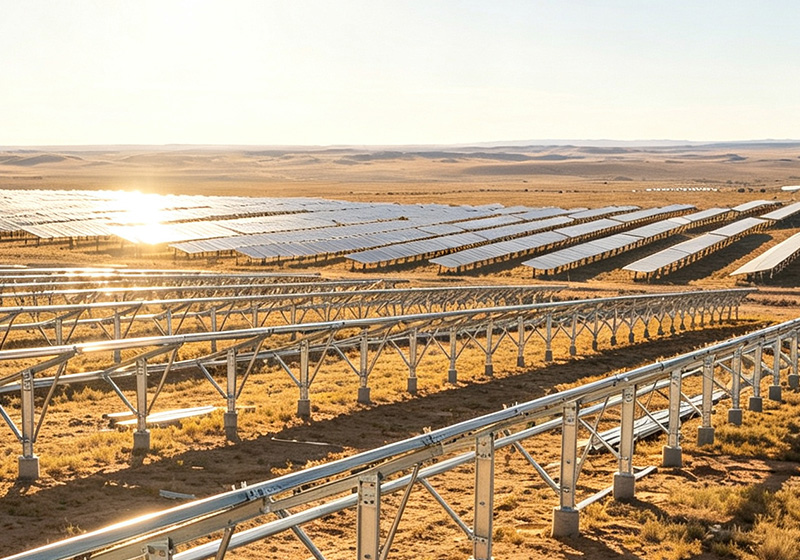
Recent analysis highlights an extraordinary acceleration in solar energy deployment across four Central European nations. Between 2019 and 2024, Czechia, Hungary, Poland, and Slovakia collectively increased their solar generation output nearly six times, significantly outpacing the European Union's average growth rate.

The collective solar generation from these countries jumped from 5 TWh to 29 TWh during this five-year period. This expansion rate doubles the EU's overall increase, which saw solar generation grow 2.5-fold from 125 TWh to 308 TWh.
The progress, however, varies significantly across the region. Poland now leads in installed capacity, exceeding 23 GW supported by over 1.5 million prosumer installations. Hungary experienced the most dramatic transformation, with solar's contribution to its electricity mix surging from 4% to nearly 25%. Czechia nearly doubled its solar output, while Slovakia faced slower growth due to policy challenges and grid connection barriers.

This solar expansion coincides with determined efforts to reduce coal dependence. Hungary cut its coal share in half, Slovakia shuttered its last dedicated coal plant, Czechia accelerated its coal phase-out timeline, and Poland reached a historic moment where renewables outpaced coal generation.
Despite these achievements, analysts note potential headwinds. All four countries project 2030 renewable shares below the EU average of 66%, with estimates ranging from 26% in Slovakia to 51% in Poland. Furthermore, the region has significantly underinvested in battery storage infrastructure, deploying just 0.1 GW of large-scale batteries—less than 2% of the EU's total capacity.

Industry observers suggest that Central Europe's experience provides a valuable blueprint for coal-dependent economies worldwide. The remarkable solar growth demonstrates that rapid energy transition is achievable, though sustaining momentum will require enhanced political commitment, increased storage solutions, and more ambitious long-term targets.
The region's success story underscores the potential for emerging economies to leapfrog traditional energy pathways, provided they implement supportive policies and invest in grid flexibility to complement renewable expansion.
Source: Analysis based on recent energy market reports and industry data.