
Leave Your Message





East-west Rooftop Solar Ideal for Energy Communities under Net Metering
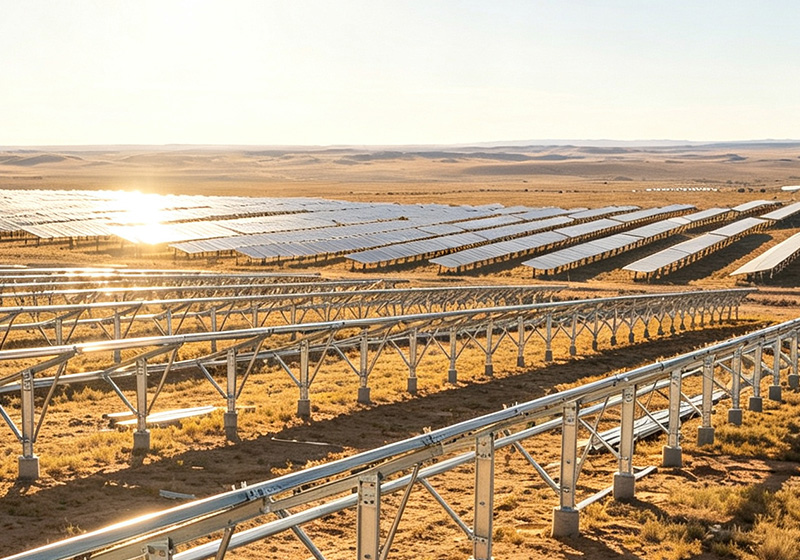
A group of researchers led by the Politecnico di Torino in Italy has investigated the optimal orientations and tilt angles for PV systems used in energy communities and has found that east-west oriented arrays provide higher shared energy values than south-oriented installations.
East-west orientation is commonly thought to be more suitable for high latitudes with low solar radiation, enabling the use of sunlight in the first and last hours of the day. These projects, however, may also be the ideal solution in tropical locations or in areas with limited available surface area, such as commercial rooftops.

First, the east-west solar panel configuration produces a more stable and consistent output throughout the day compared to a conventional south-facing installation. In addition, it reduces the central power peak at midday and extends the duration of solar production in the early and late hours of the day, with the solar panels beginning to produce at sunrise and continue producing until sunset. This makes the systems preferred by grid operators as power is supplied more evenly throughout the day; but it also encourages residential self-consumption in the afternoon, when users are more frequently at home.
In addition, shadows are avoided between rows of solar panels. By contrast, installations with solar panels facing south produce shadows from the front rows on the rear rows. Thirdly, in east-west arrays, the more compact installation of solar panels increases the density of energy production per m2. This is especially attractive on small roofs where this system allows up to 30% more density per square meter.
Another notable point is its greater tolerance to wind. With an inclination angle of 15 degrees and an east-west configuration, the wind pressure is drastically reduced compared to a south-facing configuration, much more vulnerable to north winds. An aspect derived from the previous point is that, due to less exposure to wind, east-west solar systems need much less counterweight to secure the solar panels to the roof. This allows installation on less robust roofs, or on roofs with other facility installations.
The analysis showed that, although the simulated community using south-oriented PV systems is able to achieve higher energy yields, the community based on east-west arrays offers the advantage of higher shared energy values, which the scientists said depends on better synchronicity between demand and PV power generation during early mornings and late afternoons. “The energy self-consumed virtually by the energy community achieves the highest value for southward PV orientation at the expense of higher injection peak into the grid,” they further explained. “This is a significant aspect in contexts where the absolute shared energy within the energy community is explicitly incentivized, such as in Italy.”
Part of the article excerpted from the network, infringement contact deleted.