
Leave Your Message





In the New Situation, the Survival Strategy of PV Bracket Enterprises
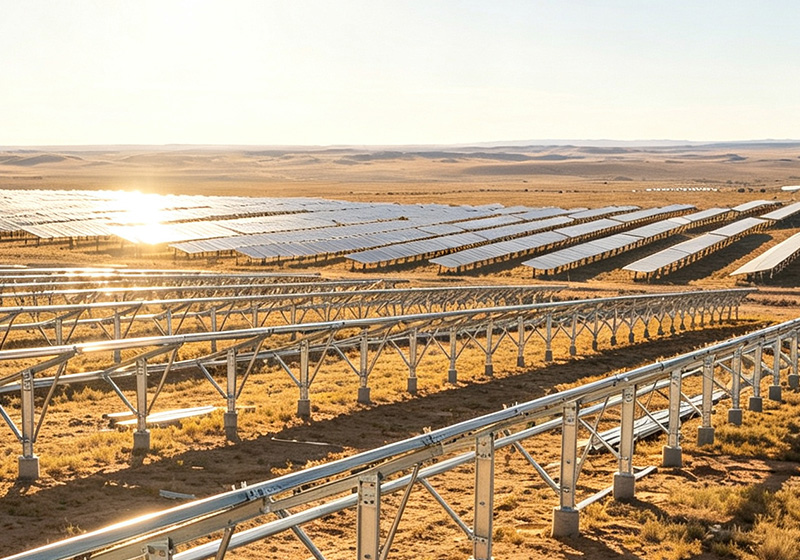
It is well known that large-scale power plants have become one of the important forms of international photovoltaic power plant development. Unlike in the past, special land such as tidal flats, near sea, coal mining subsidence areas, and saline-alkali land are becoming the main project sites in addition to deserts, Gobi, and wasteland. Therefore, for photovoltaic bracket products, they need to meet not only the conventional requirements of high power generation and low cost in the era of grid parity but also have extremely strong corrosion resistance.

Established in 2021, Xiamen FarSun Technology Co., Ltd. (hereinafter referred to as "FarSun") has a unique advantage in the corrosion resistance and high stability of its bracket products, which are sold both domestically and internationally.
In order to meet the diverse requirements of current power plant developers for bracket products in terms of cost reduction, corrosion resistance, ease of maintenance, and aesthetics, FarSun not only offers fixed, fixed adjustable, and tracking three types of bracket products but also places special emphasis on the selection of materials for photovoltaic brackets. Currently, it has hot-dip galvanized, galvanized aluminum-magnesium, and galvanized aluminum-magnesium brackets.

Hot-dip galvanizing is a stable and reliable surface treatment process for steel materials to resist environmental corrosion and is also a relatively common and widely used anti-corrosion material for solar photovoltaic brackets. The thickness of traditional hot-dip galvanized brackets is generally greater than 2mm, and for areas with strong winds, the thickness can reach 2.5mm. In response to the special application of photovoltaic brackets in the current stage, FarSun has made improvements and upgrades to the traditional galvanizing process. The new galvanized photovoltaic bracket still retains the advantages of the traditional galvanizing process, and the new technology has obvious advantages in application scenarios, anti-corrosion performance, production efficiency, and cost savings.
The galvanized aluminum-magnesium photovoltaic bracket uses alloy metal sheet with zinc, aluminum, magnesium, etc. as the main components. Due to the addition of alloy elements, the product has the characteristic of self-healing at incisions, and the metal surface also has resistance to chlorine, alkali, abrasion, and corrosion, making it better suited to harsh environments such as deserts, tidal flats, and saline-alkali land. The biggest feature of the galvanized aluminum-magnesium bracket is its cost-effectiveness. With reasonable utilization, it can save costs, improve the safety of power plants, and provide escort for high-quality power generation.