
Leave Your Message

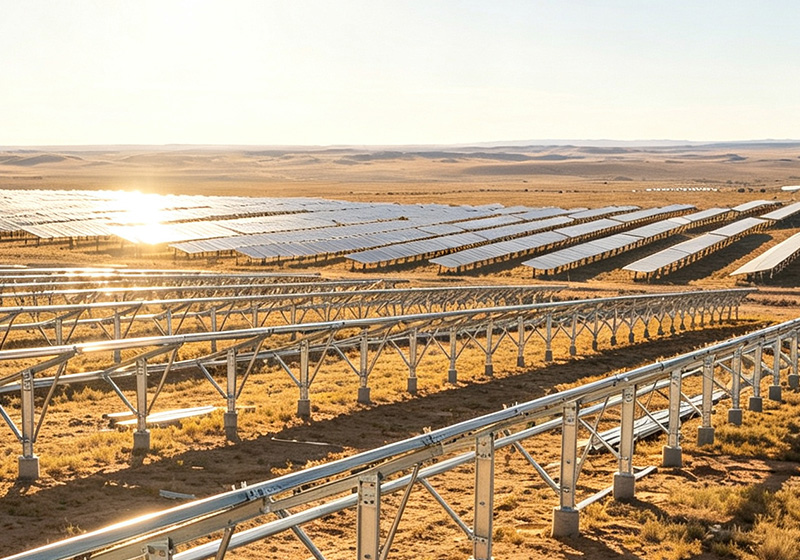





Outlook for the European Photovoltaic Market in the Second Half of 2023
In 2022, the traditional energy supply and prices in Europe were affected by the Ukraine-Russia war, prompting the European Union to accelerate the transition to renewable energy and implement stimulating policies to expand the photovoltaic (PV) electricity market. The EU also announced plans to achieve cumulative PV installations of 320 GW and 600 GW by 2025 and 2030 respectively, and to increase the share of renewable energy in electricity generation to 45%.
The accelerated deployment of PV in Europe had initially led to positive expectations for the market in the current year. Despite the traditional off-season for PV in Europe in the first quarter, the market performed better than expected. From January to June, Europe imported a cumulative 62.4 GW of components from China. However, the year-on-year growth momentum in the second quarter had shown signs of slowing compared to the first quarter, leading to the expectation that the total export of PV components from China to Europe might maintain the first-quarter level or experience a slight growth in the third quarter of the year.

The optimistic atmosphere in the European market last year, coupled with recent declines in electricity prices in Europe, resulted in excess inventory for distributors. The market generally believed that the PV installation volume in Europe this year is expected to be around 60-70 GW. Considering stockpiling and inventory, InfoLink conservatively estimated a component demand of up to 92 GW, with an optimistic estimate reaching 114 GW.
Due to the unexpectedly high pull-in of PV goods in the European market in the first half of this year, and the inability to increase installation speed due to labor shortages, causing the installation speed to lag behind the pull-in speed, ultimately leading to excess inventory. Additionally, the second-quarter performance, which was supposed to be the peak season, was not as good as the first quarter, resulting in a limited overall growth in demand in Europe this year. However, the stimulating policies by the EU and various European countries to encourage the expansion of the share of renewable energy in electricity consumption and the installation volume of PV indicates strong long-term demand for energy transformation in Europe. According to InfoLink's analysis, the long-term PV demand in Europe is expected to grow by 20-30% annually.
InfoLink observed that the demand in Europe this year is limited due to excess inventory. The demand in the Chinese market has not shown a significant improvement. Summarizing the customs data for the first half of the year, the export of PV components from China to Europe has shown obvious growth, but has slowed down compared to the first quarter. Additionally, although the EU proposed the Net Zero Industry Act in March this year, which specifies that at least 40% of the net-zero technologies in the EU must be manufactured locally in Europe, China's dominance in the global market share, with more than 80% market share in various PV processes, along with the mature PV technology and relatively low costs, makes it unlikely for the EU to fully decouple from the Chinese supply chain in the short term in order to achieve the 600 GW target by 2030.
Taking a comprehensive view of the global PV market in 2023, while the decline in supply chain prices can help boost demand, attention should still be paid to the inventory issues caused by a large pull-in of goods in the market last year. Furthermore, the overall supply chain may face temporary excess capacity issues in the short term. However, the global trend of energy transformation towards renewable sources is established. InfoLink conservatively estimated that the total global PV market demand could grow by 38% to 390 GW this year. If issues such as overseas market inventory, Chinese land compliance review, and grid integration are alleviated, global demand could potentially reach 455 GW. Furthermore, with the increasing annual capacity of various PV processes in China, this could lead to a decrease in component prices and stimulate end demand, indicating long-term demand in the PV market. If the EU continues to implement stimulating policies to promote PV development, long-term demand is expected to continue growing in the future.
Part of the article excerpted from the network, infringement contact deleted.