
Leave Your Message

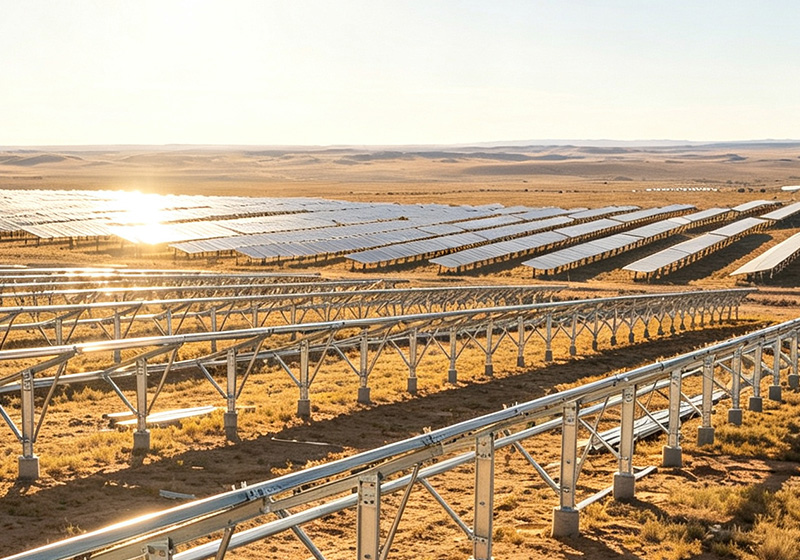





Can Stop China's Solar PV Industry Succeed?
After decades of development, China has become an undisputed global power in the photovoltaic industry! As of October 2023, China's newly installed photovoltaic capacity has reached 142.56GW, exceeding the annual installation scale of the previous year.
However, despite this rapid development, the Chinese photovoltaic industry is facing numerous risks. Traditional trade relief measures and tariff barriers still exist. Main overseas markets such as the US, the EU, and India are actively implementing policies to localize manufacturing, increasing subsidies and support for their domestic industries, leading to a trend of "de-Chinization" in photovoltaic manufacturing.

Under multiple pressures, can the overseas blockade of China's photovoltaic industry be successful?
According to the Ministry of Commerce's statistics, over the past decade, the US, EU, Canada, India, and other six countries and regions have initiated nearly 20 trade and economic investigations into China's photovoltaic products.
Apart from trade protection, several countries and regions, including the US, India, and the EU, are also actively supporting domestic enterprises in an attempt to reduce their reliance on China's photovoltaic manufacturing.
While attempting to hinder China's photovoltaic manufacturing, are these measures effective?
Currently, global photovoltaic production capacity is still concentrated in China, with market concentration exceeding 90% in the segments of silicon materials, silicon wafers, and cells, and over 80% in the component segment. In the short term, the international status of China's photovoltaic industry chain is difficult to shake.
On the other hand, China's photovoltaic manufacturing, from equipment end to product end, is almost fully equipped, providing a strong cost advantage. In contrast, many manufacturing enterprises abroad lack local manufacturing capabilities in the upstream and auxiliary material segments, leading to high production costs.
Objectively, for many years, foreign trade protection measures have not restricted the development of China's photovoltaic industry; on the contrary, they have had a reverse impact on its domestic photovoltaic industry. For example, the EU's initiation of anti-dumping and anti-subsidy measures against Chinese photovoltaic products led to a significant decline in European photovoltaic installations from 2013 to 2018.
It is important to note that there are no winners under trade protection policies. Faced with the uncertain risks of overseas markets, Chinese photovoltaic enterprises, while improving their internal capabilities, need to pay attention to the current international political, economic, and security situation, strengthen their risk prevention awareness, and reasonably plan their overseas production capacity.